
Technical Data
| Formula | C19H20N4O2S2 |
||||||
| Molecular Weight | 400.5 | CAS No. | 488832-69-5 | ||||
| Solubility (25°C)* | In vitro | DMSO | 80 mg/mL (199.75 mM) | ||||
| Water | Insoluble | ||||||
| Ethanol | Insoluble | ||||||
| In Vivo (Add solvents to the product individually and in order.) |
|
||||||
|
* <1 mg/ml means slightly soluble or insoluble. * Please note that Selleck tests the solubility of all compounds in-house, and the actual solubility may differ slightly from published values. This is normal and is due to slight batch-to-batch variations. * Room temperature shipping (Stability testing shows this product can be shipped without any cooling measures.) |
|||||||
Preparing Stock Solutions
Biological Activity
| Description | Elesclomol (STA-4783) is a novel potent oxidative stress inducer that elicits pro-apoptosis events among tumour cells. Phase 3. Elesclomol specifically binds ferredoxin 1 (FDX1) α2/α3 helices and β5 strand and inhibits FDX1-mediated Fe-S cluster biosynthesis. Elesclomol (STA-4783) is a potent copper ionophore and can be used in the research of copper-dependent cell death (cuproptosis). | |
|---|---|---|
| Targets |
|
|
| In vitro | Elesclomol (STA-4783) significantly induces the expression of heat shock stress response genes and metallothionein genes, a signature transcription profile indicative of oxidative stress in Hs294T cells. This compound (100 nM) rapidly induces Hsp70 RNA levels with a 4.8-fold increase at 1 hour and a 160-fold increase at 6 hours in Ramos Burkitt's lymphoma B cells in consistent with the intracellular ROS content which increases by 20% as early as 0.5 hour and 385% at 6 hours, and the induction of Hsp70 can be blocked by antioxidants NAC and Tiron pretreatment. It increases the number of early and late apoptotic cells with 3.7- and 11-fold through the induction of oxidative stress, which can be completely blocked by NAC, while having little effect on normal cells. The agent significantly inhibits the cell viability of SK-MEL-5, MCF-7, and HL-60 with IC50 of 110 nM, 24 nM and 9 nM, respectively. This chemical induces copper-dependent ROS generation and cytotoxicity in yeast. Instead of working through a specific cellular protein target, it interacts with the electron transport chain (ETC), a biologically coherent set of processes occurring in the mitochondrion, to generate high levels of ROS within the organelle and consequently cell death. |
|
| In Vivo | Although Elesclomol (STA-4783) (25-100 mg/kg) as a single agent shows no antitumour activity in nude mouse xenograft models of human breast cancers (MDA435, MCF7 and ZR-75-1), lung cancer (RER) or lymphoma (U937), this compound substantially enhances the efficacy of chemotherapeutic agents in these models, both in terms of tumour regression and extended survival of mice. |
Protocol (from reference)
| Cell Assay: |
|
|---|---|
| Animal Study: |
|
References
|
Customer Product Validation
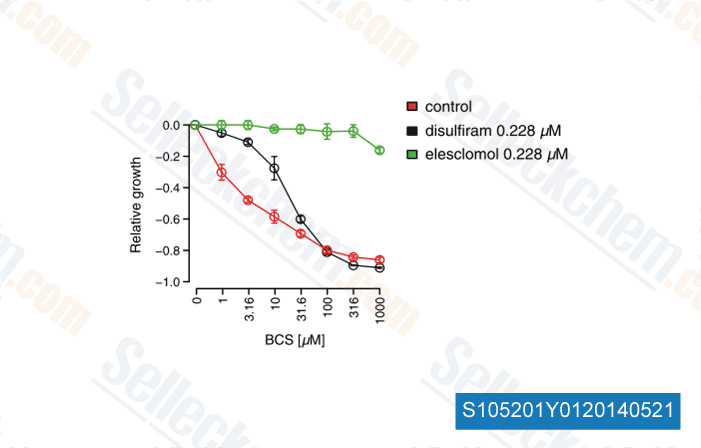
-
Data from [ BMC Genomics , 2014 , 15(1), 263 ]
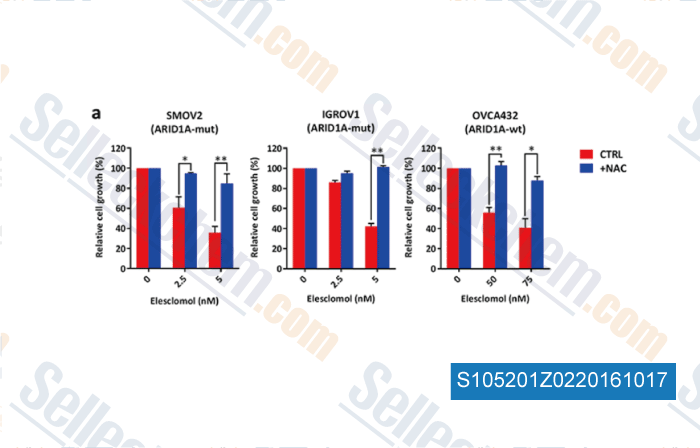
-
, , Oncotarget, 2016, 7(35):56933-56943
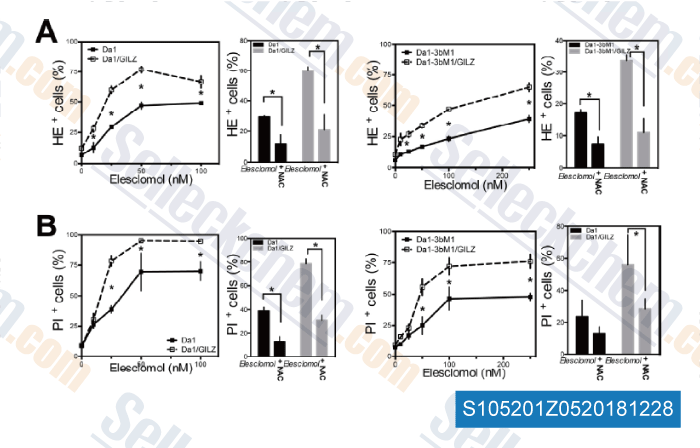
-
Data from [ , , Int J Biochem Cell Biol, 2017, 85:166-174 ]
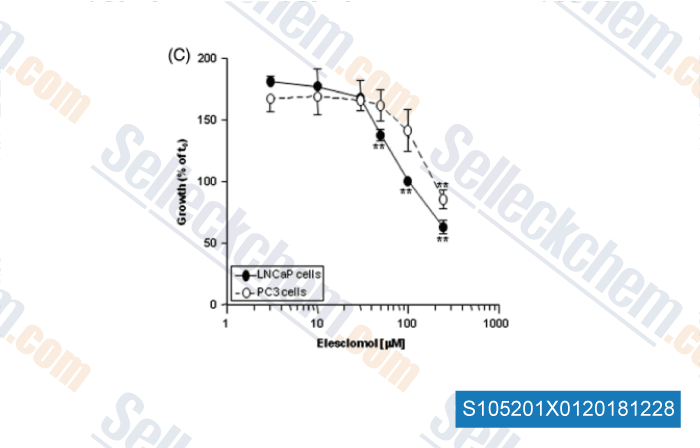
-
Data from [ , , Int J Radiat Biol, 2017, 93(2):194-203 ]
Sellecks Elesclomol (STA-4783) Has Been Cited by 122 Publications
| Mitochondrial-cytochrome c oxidase II promotes glutaminolysis to sustain tumor cell survival upon glucose deprivation [ Nat Commun, 2025, 16(1):212] | PubMed: 39747079 |
| PIK-III-Mediated Elevation of Thiamine Re-Sensitises Renal Cell Carcinoma to Cuproptosis via Activating PDHA1 [ Cell Prolif, 2025, e70101.] | PubMed: 40741714 |
| UCHL3 augments cuproptosis via PKM2 deubiquitination in hepatocellular carcinoma [ Free Radic Biol Med, 2025, 237:65-75] | PubMed: 40451468 |
| Prognostic models of immune-related cell death and stress unveil mechanisms driving macrophage phenotypic evolution in colorectal cancer [ J Transl Med, 2025, 23(1):127] | PubMed: 39875913 |
| p53 enhances elesclomol-Cu-induced cuproptosis in hepatocellular carcinoma via FDXR-mediated FDX1 upregulation [ Front Oncol, 2025, 15:1584811] | PubMed: 40630211 |
| CDC26 facilitates ferroptosis through SLC7A11 degradation and cell cycle arrest [ Clin Exp Med, 2025, 26(1):11] | PubMed: 41249642 |
| Tetrathiomolybdate alleviates bleomycin-induced pulmonary fibrosis by reducing copper concentration and suppressing EMT [ Eur J Med Res, 2025, 30(1):394] | PubMed: 40390111 |
| METTL14 promotes hippocampal neuronal cuproptosis via m6A modification on FDX1 mRNA in cerebral ischemia-reperfusion injury [ Brain Res Bull, 2025, 230:111504] | PubMed: 40769372 |
| Peripheral mitochondrial transplantation alleviates diabetes-associated cognitive dysfunction by suppressing cuproptosis [ Brain Res Bull, 2025, 222:111245] | PubMed: 39924054 |
| YTHDF3-associated m6A regulation and cuproptosis-related gene expression in steroid-induced osteonecrosis of the femoral head [ J Mol Histol, 2025, 56(5):279] | PubMed: 40879675 |
RETURN POLICY
Selleck Chemical’s Unconditional Return Policy ensures a smooth online shopping experience for our customers. If you are in any way unsatisfied with your purchase, you may return any item(s) within 7 days of receiving it. In the event of product quality issues, either protocol related or product related problems, you may return any item(s) within 365 days from the original purchase date. Please follow the instructions below when returning products.
SHIPPING AND STORAGE
Selleck products are transported at room temperature. If you receive the product at room temperature, please rest assured, the Selleck Quality Inspection Department has conducted experiments to verify that the normal temperature placement of one month will not affect the biological activity of powder products. After collecting, please store the product according to the requirements described in the datasheet. Most Selleck products are stable under the recommended conditions.
NOT FOR HUMAN, VETERINARY DIAGNOSTIC OR THERAPEUTIC USE.