
research use only
Alantolactone TGF-beta/Smad modulator
Cat.No.S8318
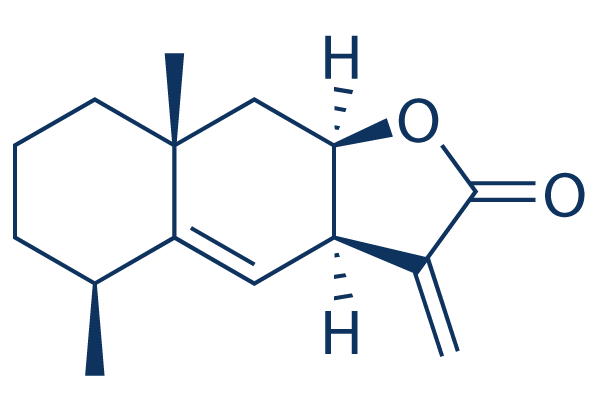
Chemical Structure
Molecular Weight: 232.32
Quality Control
| Related Targets | PKC ROCK Bcr-Abl |
|---|---|
| Other TGF-beta/Smad Inhibitors | SB431542 RepSox (E-616452) Vactosertib (TEW-7197) LDN-193189 A-83-01 LDN-193189 Dihydrochloride Galunisertib (LY2157299) SRI-011381 (C381) LY2109761 SIS3 Hydrochloride |
Chemical Information, Storage & Stability
| Molecular Weight | 232.32 | Formula | C15H20O2 |
Storage (From the date of receipt) | |
|---|---|---|---|---|---|
| CAS No. | 546-43-0 | Download SDF | Storage of Stock Solutions |
|
|
Solubility
|
In vitro |
DMSO
: 46 mg/mL
(198.0 mM)
Ethanol : 46 mg/mL Water : Insoluble |
Molarity Calculator
|
In vivo |
|||||
In vivo Formulation Calculator (Clear solution)
Step 1: Enter information below (Recommended: An additional animal making an allowance for loss during the experiment)
Step 2: Enter the in vivo formulation (This is only the calculator, not formulation. Please contact us first if there is no in vivo formulation at the solubility Section.)
Calculation results:
Working concentration: mg/ml;
Method for preparing DMSO master liquid: mg drug pre-dissolved in μL DMSO ( Master liquid concentration mg/mL, Please contact us first if the concentration exceeds the DMSO solubility of the batch of drug. )
Method for preparing in vivo formulation: Take μL DMSO master liquid, next addμL PEG300, mix and clarify, next addμL Tween 80, mix and clarify, next add μL ddH2O, mix and clarify.
Method for preparing in vivo formulation: Take μL DMSO master liquid, next add μL Corn oil, mix and clarify.
Note: 1. Please make sure the liquid is clear before adding the next solvent.
2. Be sure to add the solvent(s) in order. You must ensure that the solution obtained, in the previous addition, is a clear solution before proceeding to add the next solvent. Physical methods such as vortex, ultrasound or hot water bath can be used to aid dissolving.
Mechanism of Action
| Targets/IC50/Ki |
STAT3
activin/SMAD3
|
|---|---|
| In vitro |
Alantolactone selectively suppresses STAT3 activation and exhibits potent anticancer activity in MDA-MB-231 cells. This compound effectively suppressed both constitutive and inducible STAT3 activation at tyrosine 705. It decreased STAT3 translocation to the nucleus, its DNA-binding, and STAT3 target gene expression. This chemical significantly inhibits STAT3 activation with a marginal effect on MAPKs and on NF-
kB transcription; however, this effect is not mediated by inhibiting STAT3 upstream kinases. SHP-1, SHP-2, and PTEN, which are protein tyrosine phosphatases (PTPs) were not affected by alantolactone. Its treatment resulted in the inhibition of migration, invasion, adhesion, and colony formation. It could induce activin signaling and activin target gene expression. This agent activated the activin signaling pathway in a cancer cell line. It could promote SMAD2/3 nuclear translocation in a very short time.
|
| In vivo |
In vivo administration of alantolactone inhibited the growth of human breast xenograft tumors. This compound exerts no toxic effect on liver and kidneys in vivo. The drug was well tolerated by mice and no mortality or any sign of pharmacotoxicity was found at a dose of 100 mg/kg during all the experimental periods. It can cross blood-brain barrier.
|
References |
|
Tech Support
Tel: +1-832-582-8158 Ext:3
If you have any other enquiries, please leave a message.

Products are for research use only. Not for human use. We do not sell to patients.
©Copyright 2013 Selleck Chemicals. All Rights Reserved.