
research use only
Diethylmaleate NF-κB inhibitor
Cat.No.S4712
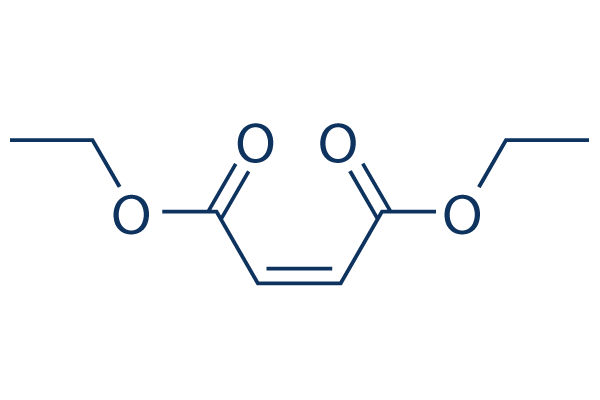
Chemical Structure
Molecular Weight: 172.18
Quality Control
| Related Targets | HDAC Antioxidant ROS IκB/IKK Nrf2 AP-1 MALT NOD |
|---|---|
| Other NF-κB Inhibitors | DCZ0415 Omaveloxolone (RTA-408) BAY 11-7082 (BAY 11-7821) JSH-23 QNZ (EVP4593) Caffeic Acid Phenethyl Ester SC75741 DHA (Dihydroartemisinin) Withaferin A (WFA) Andrographolide |
Chemical Information, Storage & Stability
| Molecular Weight | 172.18 | Formula | C8H12O4 |
Storage (From the date of receipt) | 2 years -20°C liquid |
|---|---|---|---|---|---|
| CAS No. | 141-05-9 | Download SDF | Storage of Stock Solutions |
|
|
| Synonyms | Diethyl ester, Maleic acid diethyl ester | Smiles | CCOC(=O)C=CC(=O)OCC | ||
Solubility
|
In vitro |
|
Molarity Calculator
|
In vivo |
|||||
In vivo Formulation Calculator (Clear solution)
Step 1: Enter information below (Recommended: An additional animal making an allowance for loss during the experiment)
Step 2: Enter the in vivo formulation (This is only the calculator, not formulation. Please contact us first if there is no in vivo formulation at the solubility Section.)
Calculation results:
Working concentration: mg/ml;
Method for preparing DMSO master liquid: mg drug pre-dissolved in μL DMSO ( Master liquid concentration mg/mL, Please contact us first if the concentration exceeds the DMSO solubility of the batch of drug. )
Method for preparing in vivo formulation: Take μL DMSO master liquid, next addμL PEG300, mix and clarify, next addμL Tween 80, mix and clarify, next add μL ddH2O, mix and clarify.
Method for preparing in vivo formulation: Take μL DMSO master liquid, next add μL Corn oil, mix and clarify.
Note: 1. Please make sure the liquid is clear before adding the next solvent.
2. Be sure to add the solvent(s) in order. You must ensure that the solution obtained, in the previous addition, is a clear solution before proceeding to add the next solvent. Physical methods such as vortex, ultrasound or hot water bath can be used to aid dissolving.
Mechanism of Action
| Targets/IC50/Ki |
NF-κB
Nrf2
|
|---|---|
| In vitro |
DEM induces upregulation of GSH(L-c-glutamyl-L-cysteinyl-glycine) metabolism, and the downregulation of pathways of cancer, chemokine signaling, cytokine-cytokine receptor, and focal adhesion in transformed cells. DEM appears to modify microenvironment of transformed cells thereby restraining tumor cell growth. DEM is cytotoxic to the transformed cells in a concentration dependent manner. DEM at 0.25 mM decreases cell viability to 75%. The co-exposure of cells to DEM+GSHe inhibits DEM induced cytotoxicity. DEM exposure increases the ROS generation by multiple orders of magnitude in transformed cells. This is evident from the dose and time dependent increase in fluorescence intensity of CMH2DCFDA. Moreover, DEM activates MAPK pathway and DEM induced activation of ERK is found to be due to phosphorylation at Thr 202/204. |
| In vivo |
Sperm motility and epididymal sperm count are significantly reduced in the DEM treated animals. Fertility status is also affected by DEM exposure as is evident from the percent fertility and the litter size. consequences of the oxidative stress produced by the DEM induces glutathione depletion, on the reproductive ability of male mice and modulation of the various components of the antioxidant defense system at the transcriptional level. |
References |
|
Tech Support
Tel: +1-832-582-8158 Ext:3
If you have any other enquiries, please leave a message.

Products are for research use only. Not for human use. We do not sell to patients.
©Copyright 2013 Selleck Chemicals. All Rights Reserved.