
research use only
Eugenol Immunology & Inflammation related chemical
Cat.No.S4706
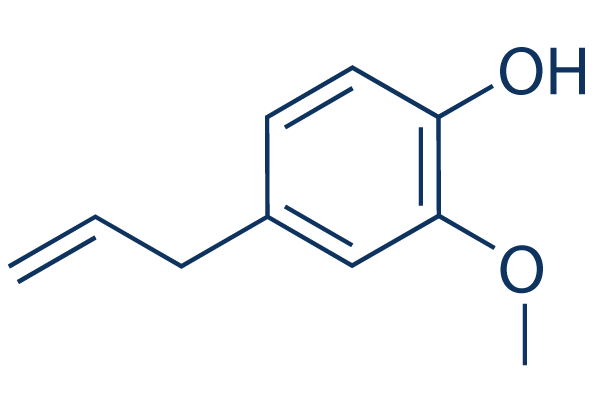
Chemical Structure
Molecular Weight: 164.20
Quality Control
| Related Targets | PD-1/PD-L1 CXCR STING AhR CD markers Interleukins Anti-infection Antioxidant COX Histamine Receptor |
|---|---|
| Other Immunology & Inflammation related Inhibitors | Cl-amidine Bestatin (Ubenimex) Bindarit (AF 2838) Tranilast Tempol Sinomenine GI254023X (GI4023) ATP Geniposidic acid CORM-3 |
Chemical Information, Storage & Stability
| Molecular Weight | 164.20 | Formula | C10H12O2 |
Storage (From the date of receipt) | 2 years -20°C liquid |
|---|---|---|---|---|---|
| CAS No. | 97-53-0 | Download SDF | Storage of Stock Solutions |
|
|
Solubility
|
In vitro |
|
Molarity Calculator
|
In vivo |
|||||
In vivo Formulation Calculator (Clear solution)
Step 1: Enter information below (Recommended: An additional animal making an allowance for loss during the experiment)
Step 2: Enter the in vivo formulation (This is only the calculator, not formulation. Please contact us first if there is no in vivo formulation at the solubility Section.)
Calculation results:
Working concentration: mg/ml;
Method for preparing DMSO master liquid: mg drug pre-dissolved in μL DMSO ( Master liquid concentration mg/mL, Please contact us first if the concentration exceeds the DMSO solubility of the batch of drug. )
Method for preparing in vivo formulation: Take μL DMSO master liquid, next addμL PEG300, mix and clarify, next addμL Tween 80, mix and clarify, next add μL ddH2O, mix and clarify.
Method for preparing in vivo formulation: Take μL DMSO master liquid, next add μL Corn oil, mix and clarify.
Note: 1. Please make sure the liquid is clear before adding the next solvent.
2. Be sure to add the solvent(s) in order. You must ensure that the solution obtained, in the previous addition, is a clear solution before proceeding to add the next solvent. Physical methods such as vortex, ultrasound or hot water bath can be used to aid dissolving.
Mechanism of Action
| In vitro |
Eugenol has antiproliferative effects in diverse cancer cell lines as well as in B16 melanoma xenograft model. It induces apoptosis in various cancer cells, including mast cells, melanoma cells and HL-60 leukaemia cells. This compound at low dose (2 μM) has specific toxicity against different breast cancer cells. This killing effect is mediated mainly through inducing the internal apoptotic pathway and strong down-regulation of E2F1 and its downstream antiapoptosis target survivin, independently of the status of p53 and ERα. It also inhibits several other breast cancer related oncogenes, such as NF-κB and cyclin D1. Moreover, this chemical up-regulates the versatile cyclin-dependent kinase inhibitor p21WAF1 protein, and inhibits the proliferation of breast cancer cells in a p53-independent manner.
|
|---|---|
| In vivo |
Eugenol inhibits the proliferation of breast cancer cells in vivo as well. The inhibitory effect of this compound on onco-proteins is also observed in vivo in tumour xenografts. This chemical (0.2, 1.0, 5.0 or 25 mg/kg) when given orally at three different times in relation to the time of CCl4 dosing (i.p administration of 0.4 mg/kg), i.e. prior to (-1 hr), along with (0 hr) or after (+ 3 hrs), prevents significantly the rise in SGOT (Serum glutamic-oxaloacetic transaminase) activity, lipid peroxidation as well as liver necrosis. The protective effect is more evident at 1 mg and 5 mg eugenol doses than at 0.2 and 25 mg doses. However, the decrease in microsomal G-6-pase activity by CCl4 treatment is not prevented by this compound suggesting that the damage to endoplasmic reticulum is not protected.
|
References |
|
Tech Support
Tel: +1-832-582-8158 Ext:3
If you have any other enquiries, please leave a message.

Products are for research use only. Not for human use. We do not sell to patients.
©Copyright 2013 Selleck Chemicals. All Rights Reserved.