
HDAC Inhibitors
| Cat.No. | Product Name | Information | Product Use Citations | Product Validations |
|---|---|---|---|---|
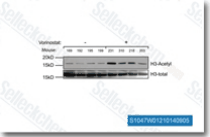
| S1047 | Vorinostat (SAHA) | Vorinostat (SAHA) is an HDAC inhibitor with IC50 of ~10 nM in a cell-free assay and abrogates productive HPV-18 DNA amplification. |
|
|
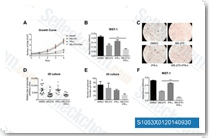
| S1053 | Entinostat (MS-275) | Entinostat (MS-275, SNDX-275) strongly inhibits HDAC1 and HDAC3 with IC50 of 0.51 μM and 1.7 μM in cell-free assays, compared with HDACs 4, 6, 8, and 10. This compound induces Autophagy and Apoptosis. Phase 3. |
|
|
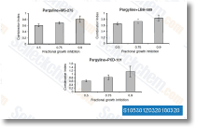
| S1030 | Panobinostat (LBH589) | Panobinostat (LBH589, NVP-LBH589) is a novel broad-spectrum HDAC inhibitor with IC50 of 5 nM in a cell-free assay. It induces autophagy and apoptosis, and effectively disrupts HIV latency in vivo. Phase 3. |
|
|
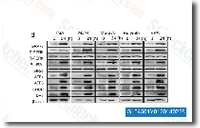
| S1045 | Trichostatin A (TSA) | TSA (Trichostatin A) is an HDAC inhibitor with an IC50 of ~1.8 nM in cell-free assays. |
|
|
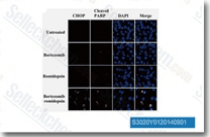
| S3020 | Romidepsin (FK228) | Romidepsin (FK228, Depsipeptide, FR 901228, NSC 630176) is a potent HDAC1 and HDAC2 inhibitor with IC50 of 36 nM and 47 nM in cell-free assays, respectively. This compound controls growth and induces apoptosis in neuroblastoma tumour cells. |
|
|
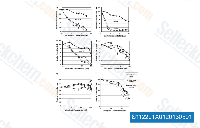
| S1122 | Mocetinostat (MGCD0103) | Mocetinostat (MGCD0103, MG0103) is a potent HDAC inhibitor with most potency for HDAC1 with IC50 of 0.15 μM in a cell-free assay, 2- to 10- fold selectivity against HDAC2, 3, and 11, and no activity to HDAC4, 5, 6, 7, and 8. Mocetinostat (MGCD0103) induces Apoptosis and Autophagy. Phase 2. |
|
|
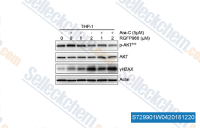
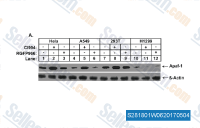
| S7229 | RGFP966 | RGFP966 is an HDAC3 inhibitor with an IC50 of 0.08 μM in cell-free assay, exhibiting > 200-fold selectivity over other HDAC. |
|
|
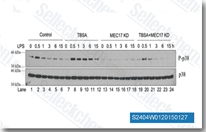
| S8049 | Tubastatin A | Tububastatin A is a potent and selective HDAC6 inhibitor with IC50 of 15 nM in a cell-free assay. It is selective against all the other isozymes (1000-fold) except HDAC8 (57-fold). This compound promotes autophagy and increases apoptosis. |
|
|
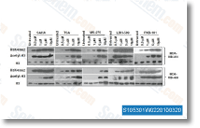
| S1085 | Belinostat (PXD101) | Belinostat is a novel HDAC inhibitor with IC50 of 27 nM in a cell-free assay, with activity demonstrated in cisplatin-resistant tumours. Belinostat (PXD101) induces autophagy. |
|
|
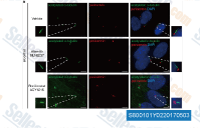
| S8001 | Ricolinostat (ACY-1215) | Ricolinostat (ACY-1215, Rocilinostat) is a selective HDAC6 inhibitor with an IC50 of 5 nM in a cell-free assay. It is >10-fold more selective for HDAC6 than HDAC1/2/3 (class I HDACs) with slight activity against HDAC8, minimal activity against HDAC4/5/7/9/11, Sirtuin1, and Sirtuin2. Ricolinostat (ACY-1215) suppresses cell proliferation and promotes apoptosis. Phase 2. |
|
|
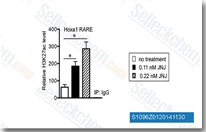
| S1096 | Quisinostat (JNJ-26481585) Dihydrochloride | Quisinostat (JNJ-26481585) 2HCl is a novel second-generation HDAC inhibitor with highest potency for HDAC1 with IC50 of 0.11 nM in a cell-free assay, modest potency to HDACs 2, 4, 10, and 11; greater than 30-fold selectivity against HDACs 3, 5, 8, and 9 and lowest potency to HDACs 6 and 7. Phase 2. |
|
|
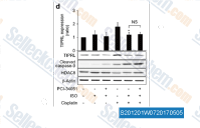
| S2012 | PCI-34051 | PCI-34051 is a potent and specific HDAC8 inhibitor with IC50 of 10 nM in a cell-free assay. It has greater than 200-fold selectivity over HDAC1 and 6, more than 1000-fold selectivity over HDAC2, 3, and 10. PCI-34051 induces caspase-dependent apoptosis. |
|
|
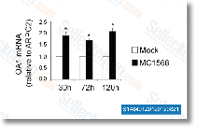
| S1484 | MC1568 | MC1568 is a selective HDAC inhibitor for maize HD1-A with IC50 of 100 nM in a cell-free assay. It is 34-fold more selective for HD1-A than HD1-B. |
|
|
| S2627 | Tubastatin A HCl | Tubastatin A HCl is a potent and selective HDAC6 inhibitor with an IC50 of 15 nM in a cell-free assay. It is selective (1000-fold more) against all other isozymes except HDAC8 (57-fold more). |
|
|
| S2818 | Tacedinaline (CI994) | Tacedinaline (CI994, PD-123654, GOE-5549, Acetyldinaline) is a selective class I HDAC inhibitor with IC50 of 0.9, 0.9, 1.2, and >20 μM for human HDAC 1, 2, 3, and 8, respectively. Phase 3. |
|
|
| S3944 | VPA (Valproic acid) | Valproic acid (VPA) is a fatty acid with anticonvulsant properties used in the treatment of epilepsy. It is also a histone deacetylase (HDAC) inhibitor and is under investigation for treatment of HIV and various cancers. This compound induces autophagy and mitophagy by upregulation of BNIP3 and mitochondrial biogenesis by upregulating PGC-1α. Additionally, it activates Notch-1 signalling. |
|
|
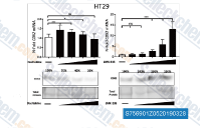
| S7569 | LMK-235 | LMK-235 is a selective inhibitor of HDAC4 and HDAC5 with IC50 of 11.9 nM and 4.2 nM, respectively. |
|
|
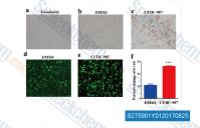
| S2759 | Fimepinostat (CUDC-907) | Fimepinostat (CUDC-907) is a dual PI3K and HDAC inhibitor targeting PI3Kα and HDAC1/2/3/10 with IC50 values of 19 nM and 1.7 nM/5 nM/1.8 nM/2.8 nM, respectively. This compound induces cell cycle arrest and apoptosis in breast cancer cells. Phase 1. |
|
|
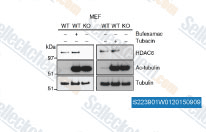
| S2239 | Tubacin | Tubacin is a highly potent and selective, reversible, cell-permeable HDAC6 inhibitor with an IC50 of 4 nM in a cell-free assay, approximately 350-fold selectivity over HDAC1. This compound reduces the replication of the Japanese Encephalitis Virus via the decrease of viral RNA synthesis. |
|
|
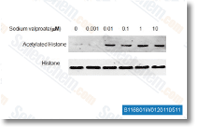
| S1168 | Valproic Acid sodium | Valproic Acid sodium is a HDAC inhibitor by selectively inducing proteasomal degradation of HDAC2, used in the treatment of epilepsy, bipolar disorder and prevention of migraine headaches. Valproic acid induces Notch1 signaling in small cell lung cancer (SCLC) cells. Valproic acid is under investigation for treatment of HIV and various cancers. Valproic acid (VPA) induces autophagy and mitophagy by upregulation of BNIP3 and mitochondrial biogenesis by upregulating PGC-1α. |
|
|
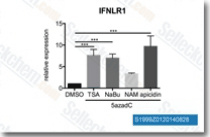
| S1999 | Sodium butyrate | Sodium butyrate (NaB, Butanoic acid sodium salt), sodium salt of butyric acid, is a histone deacetylase inhibitor and competitively binds to the zinc sites of class I and II histone deacetylases (HDACs). This compound inhibits cell cycle progression, promotes differentiation, and induces apoptosis and autophagy in several types of cancer cells. |
|
|
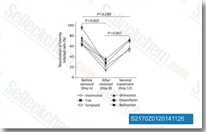
| S2170 | ITF-2357 (Givinostat) Hydrochloride Monohydrate | Givinostat (ITF2357) is a potent HDAC inhibitor for maize HD2, HD1B and HD1A with IC50 of 10 nM, 7.5 nM and 16 nM in cell-free assays. Phase 2. |
|
|
| S8567 | Tucidinostat (Chidamide) | Tucidinostat (Chidamide, HBI-8000, CS-055) is a low nanomolar inhibitor of HDAC1, 2, 3, and 10, the HDAC isotypes well documented to be associated with the malignant phenotype. It exhibits IC50 values of 95, 160, 67, and 78 nM for HDAC1, 2, 3, and 10, respectively. |
|
|
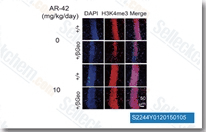
| S2244 | AR-42 | AR-42 (HDAC-42) is an HDAC inhibitor with an IC50 of 30 nM. Phase 1. |
|
|
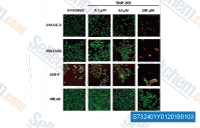
| S7324 | TMP269 | TMP269 is a potent, selective class IIa HDAC inhibitor with an IC50 of 157 nM, 97 nM, 43 nM and 23 nM for HDAC4, HDAC5, HDAC7 and HDAC9, respectively. |
|
|
| S2341 | (-)-Parthenolide | (-)-Parthenolide, an inhibitor of the Nuclear Factor-κB Pathway, specifically depletes HDAC1 protein without affecting other class I/II HDACs; Also promotes the ubiquitination of MDM2 and activates p53 cellular functions. |
|
-Parthenolide-S234101W0220161110.gif)
|
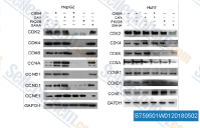
| S7595 | Santacruzamate A (CAY10683) | Santacruzamate A (CAY10683) is a potent and selective HDAC inhibitor, with IC50 of 119 pM for HDAC2 and >3600-fold selectivity over other HDACs. |
|
|
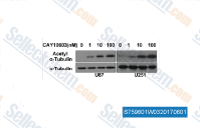
| S7596 | CAY10603 | CAY10603 (BML-281) is a potent and selective HDAC6 inhibitor with IC50 of 2 pM, >200-fold selectivity over other HDACs. |
|
|
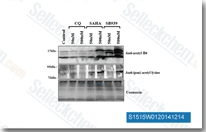
| S1515 | Pracinostat (SB939) | Pracinostat (SB939) is a potent pan-HDAC inhibitor with IC50 of 40-140 nM with exception for HDAC6. It has no activity against the class III isoenzyme SIRT I. This compound induces apoptosis in tumour cells. Phase 2. |
|
|
| S3592 | 4-PBA (4-Phenylbutyric acid) | 4-PBA (4-Phenylbutyric acid) is a histone deacetylase (HDAC) inhibitor and a key epigenetic inducer of anti-HCV hepatic hepcidin. This compound inhibits LPS-induced inflammation through regulating endoplasmic-reticulum (ER) stress and autophagy in acute lung injury models. |
|
|
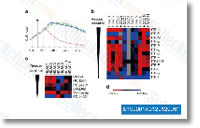
| S1090 | Abexinostat (PCI-24781) | Abexinostat (PCI-24781, CRA-024781) is a novel pan-HDAC inhibitor that mostly targets HDAC1 with Ki of 7 nM. It shows modest potency to HDACs 2, 3, 6, and 10 and greater than 40-fold selectivity against HDAC8. This compound is currently in Phase 1/2. |
|
|
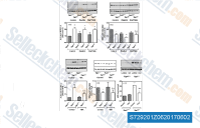
| S7292 | RG2833 (RGFP109) | RG2833 (RGFP109) is a brain-penetrant HDAC inhibitor, and this compound exhibits IC50 values of 60 nM and 50 nM for HDAC1 and HDAC3, respectively, in cell-free assays. |
|
|
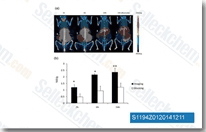
| S1194 | CUDC-101 | CUDC-101 is a potent multi-targeted inhibitor against HDAC, EGFR and HER2 with IC50 of 4.4 nM, 2.4 nM, and 15.7 nM, and this compound inhibits class I/II HDACs, but not class III, Sir-type HDACs. Phase 1. |
|
|
| S8502 | TMP195 | TMP195 (TFMO 2) is a selective, first-in-class, class IIa HDAC inhibitor with Ki of 59, 60, 26 and 15nM for HDAC4, HDAC5, HDAC7 and HDAC9, respectively. |
|
|
| S1095 | Dacinostat (LAQ824) | Dacinostat (LAQ824, NVP-LAQ824) is a novel HDAC inhibitor with IC50 of 32 nM and is known to activate the p21 promoter. |
|

|
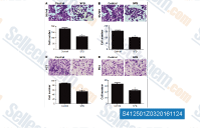
| S4125 | 4-PBA (Sodium Phenylbutyrate) | 4-PBA (Sodium Phenylbutyrate) is a salt of 4-phenylbutyrate or 4-phenylbutyric acid. This compound is a histone deacetylase inhibitor, used to treat urea cycle disorders. |
|
|
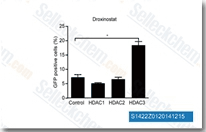
| S1422 | Droxinostat | Droxinostat (NS 41080) is a selective inhibitor of HDAC, mostly for HDACs 6 and 8 with IC50 of 2.47 μM and 1.46 μM, greater than 8-fold selective against HDAC3 and no inhibition to HDAC1, 2, 4, 5, 7, 9, and 10. |
|
|
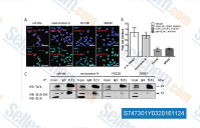
| S7473 | Nexturastat A | Nexturastat A is a potent and selective HDAC6 inhibitor with IC50 of 5 nM, >190-fold selectivity over other HDACs. |
|
|
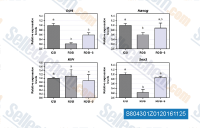
| S8043 | Scriptaid | Scriptaid (GCK 1026) is an inhibitor of HDAC. It shows a greater effect on acetylated H4 than H3. |
|
|
| S7555 | Domatinostat (4SC-202) | Domatinostat (4SC-202) is a selective class I HDAC inhibitor with IC50 of 1.20 M, 1.12 M, and 0.57 M for HDAC1, HDAC2, and HDAC3, respectively. This compound also displays inhibitory activity against Lysine specific demethylase 1 (LSD1) and is in Phase 1. |
|
|
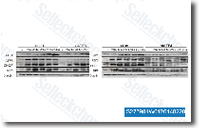
| S2779 | M344 (D 237) | M344 is a potent HDAC inhibitor with an IC50 of 100 nM and is able to induce cell differentiation. |
|
|
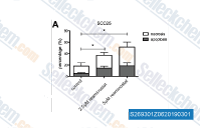
| S2693 | Resminostat | Resminostat (RAS2410) dose-dependently and selectively inhibits HDAC1/3/6 with IC50 of 42.5 nM/50.1 nM/71.8 nM, less potent to HDAC8 with IC50 of 877 nM. |
|
|
| S7689 | BG45 | BG45 is a class I HDAC inhibitor with IC50 of 289 nM, 2.0 µM, 2.2 µM and >20 µM for HDAC3, HDAC1, HDAC2, and HDAC6 in cell-free assays, respectively. |
|
|
| S8464 | Citarinostat (ACY-241) | Citarinostat (ACY-241, HDAC-IN-2) is an orally available selective HDAC6 inhibitor with IC50 of 2.6 nM and 46 nM for HDAC6 and HDAC3, respectively, and has 13 to 18-fold selectivity towards HDAC6 in comparison to HDAC1-3. |
|
|
| S6687 | SIS17 | SIS17 is a mammalian histone deacetylase 11 (HDAC 11)-specific inhibitor with an IC50 of 0.83 μM. This compound inhibits the demyristoylation of HDAC11 substrate, serine hydroxymethyl transferase 2, without inhibiting other HDACs. |
|
|
| S8495 | WT161 | WT161 is a potent, selective, and bioavailable HDAC6 inhibitor with IC50 values of 0.4 nM, 8.35 nM and 15.4 nM for HDAC6, HDAC1 and HDAC2, respectively; shown to have >100-fold selectivity over other HDACs. This compound induces apoptosis. |
|
|
| S8648 | ACY-738 | ACY-738 inhibits HDAC6 with low nanomolar potency (IC50=1.7 nM) and a selectivity of 60- to 1500-fold over class I HDACs. |
|
|
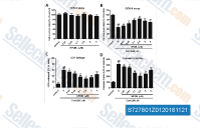
| S7278 | HPOB | HPOB is a potent, selective HDAC6 inhibitor with IC50 of 56 nM, >30-fold selectivity over other HDACs. |
|
|
| S6738 | TC-H 106 | TC-H 106 (Pimelic Diphenylamide 106) is a slow, tight-binding inhibitor of class I histone deacetylases(HDAC) with Ki value of 148 nM, about 102 nM, 14 nM for HDAC1, HDAC2, HDAC3, respectively. |
|
|
| S0709 | Tubastatin A TFA | Tubastatin A TFA (Tubastatin A trifluoroacetate salt) is a potent and selective HDAC6 inhibitor with IC50 of 15 nM in a cell-free assay. It is selective against all the other isozymes (1000-fold) except HDAC8 (57-fold). Tubastatin A promotes autophagy and increases apoptosis. |
|
|
| S3981 | Sinapinic Acid | Sinapinic acid (Sinapic acid) is a small naturally occurring hydroxycinnamic acid which belongs to phenylpropanoid family and commonly used as matrix in MALDI mass spectrometry. Sinapinic acid (Sinapic acid) acts as an inhibitor of HDAC, with IC50 of 2.27 mM, and also inhibits ACE-I activity. |
|
|
| S5810 | UF010 | UF010 is a class I HDAC-selective inhibitor with IC50 values of 0.5 nM, 0.1 nM, 0.06 nM, 1.5 nM, 9.1 nM and 15.3 nM for HDAC1, HDAC2, HDAC3, HDAC8, HDAC6 and HDAC10, respectively. |
|
|
| S0864 | ACY-775 | ACY-775 is a potent and selective histone deacetylase 6 (HDAC6) inhibitor with an IC50 of 7.5 nM. |
|
|
| S8773 | TH34 | TH34 is a HDAC inhibitor that shows pronounced selectivity for HDACs 6, 8 and 10 over HDACs 1, 2 and 3. In a NanoBRET assay, this compound strongly binds HDAC6, 8 and 10 with low-micromolar IC50 concentrations (HDAC6: 4.6 µM, HDAC8: 1.9 µM, HDAC10: 7.7 µM). |
|
|
| E8178 | Quisinostat | Quisinostat(JNJ-26481585) is a potent and orally active second-generation inhibitor of pan-Histone Deacetylase (HDAC). It inhibits HDAC1, HDAC2, HDAC4, HDAC10, HDAC11 with IC50s of 0.11 nM , 0.33 nM , 0.64 nM , 0.46 nM, 0.37 nM respectively. It exhibits potent in vivo antitumor activity and potential clinical use in various solid and hematologic malignancies. |
|
|
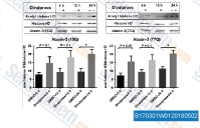
| S1703 | Divalproex Sodium | Divalproex Sodium, consisting of a compound of sodium valproate and valproic acid in a 1:1 molar relationship in an enteric coated form, is a HDAC inhibitor, used in the treatment for epilepsy. |
|
|
| E0391 | BRD-6929 | BRD-6929 is an inhibitor of histone deacetylase 1 (HDAC1) and HDAC2 with IC50s of 0.04 µM and 0.1 µM, respectively. It exhibits antiproliferative activities against a human cancer cell line (HCT116) and in human mammary epithelial cells (HMEC). |
|
|
| S1073 | BML-210 (CAY10433) | BML-210 (CAY10433) is a small molecule inhibitor of HDAC. It inhibits the HDAC4-VP16-driven reporter signal in a dose-dependent manner with an apparent IC50 of ~5 µM. |
|
|
| S9262 | Raddeanin A | Raddeanin A (Raddeanin R3, NSC382873), a triterpenoid saponin from Anemone raddeana Regel, displays moderate inhibitory activity against histone deacetylases (HDACs) and has high antiangiogenic potency, antitumor activity. |
|
|
| E6577New | 1-Naphthohydroxamic acid | 1-Naphthohydroxamic acid (Compound 2) demonstrates potent and selective inhibition of HDAC8 (IC50 = 14 μM), exhibiting significantly greater selectivity for HDAC8 compared to class I HDAC1 and class II HDAC6 (IC50 >100 μM). This compound does not elevate global histone H4 acetylation levels nor decrease total intracellular HDAC activity. Additionally, 1-Naphthohydroxamic acid has been shown to promote tubulin acetylation. | ||
| E5952New | PT 3 | PT 3 is a benzamide-class, potent, and selective inhibitor of Histone Deacetylase 3 (HDAC3) with an IC50 of 245 nM. It crosses the blood-brain barrier and enhances learning and memory in novel object recognition models in mice. | ||
| E8302New | YX968 | YX968 is a potent, rapid, and selective PROTAC dual degrader of HDAC3/8 with DC50 values of 1.7 nM and 6.1 nM, respectively. It promotes apoptosis and kills cancer cells with a high potency in vitro and can be used in cancer research. | ||
| E8292New | GEM144 | GEM144 is a potent and orally active dual inhibitor of DNA polymerase α (POLA1) and HDAC11 . It exhibits potent antiproliferative activity in vitro and anti-tumour efficacy in vivo by inducing p53 acetylation, p21 activation, G1/S cell cycle arrest, and apoptosis. | ||
| E1086 | KT-531 | KT-531 (KT531) is a potent, selective HDAC6 inhibitor with an IC50 of 8.5 nM, displaying 39-fold selectivity over other HDAC isoforms. | ||
| E8326New | HNHA | HNHA (N-hydroxy-7-(2-naphthylthio) heptanomide) is a cell-permeable inhibitor of histone deacetylase (HDAC) activity, a key enzyme in gene expression and carcinogenesis with an IC50 of 100 nM. It also exhibits anti-tumor activity both in vitro and in vivo. | ||
| E1686 | SW-100 | SW-100 is a selective inhibitor of histone deacetylase 6 (HDAC6) with an IC50 of 2.3 nM. It displays 1000-fold selectivity for HDAC6 relative to all other HDAC isozymes. | ||
| E1580 | TNG260 | TNG260 is an inhibitor of CoREST-selective deacetylase (CoreDAC) that inhibits HDAC1 with 10-fold selectivity over HDAC3. It decreases intratumoural neutrophil infiltration and exhibits immune-mediated cell killing. | ||
| E1469 | ITF3756 | ITF3756 is a selective histone deacetylase 6 (HDAC6) inhibitor bearing a pentaheterocyclic scaffold. It can be used in research of autoimmune disorders, neurodegenerative diseases, and cancer. | ||
| E1554 | Tefinostat(CHR-2845) | Tefinostat (CHR-2845) is a monocyte/macrophage-targeted inhibitor of pan-histone deacetylase (HDAC), which undergoes cleavage mediated by the intracellular esterase human carboxylesterase-1 (hCE-1) to yield the active acid CHR-2847. In vitro studies reveal a specific heightened sensitivity of monocytoid leukemias to this compound. | ||
| S2190 | Pyroxamide (NSC 696085) | Pyroxamide (NSC 696085) is a potent inhibitor of affinity-purified HDAC1 with ID50 of 100 nM, and it also induces growth suppression and cell death in human rhabdomyosarcoma in vitro. | ||
| S8743 | SKLB-23bb | SKLB-23bb is an orally bioavailable HDAC6-selective inhibitor with IC50 values under 100 nmol/L, against most of the cell lines checked. It also has microtubule-disrupting ability. | ||
| S6548 | NKL 22 | NKL 22 is a selective inhibitor of HDAC with an IC50 of 78 µM. | ||
| E1319 | Corin | Corin is a dual inhibitor of histone lysine specific demethylase (LSD1) and histone deacetylase (HDAC), with a Ki(inact) of 110 nM for LSD1 and an IC50 of 147 nM for HDAC1. | ||
| S7726 | BRD73954 | BRD73954 is a potent and selective HDAC inhibitor with IC50 of 36 nM and 120 nM for HDAC6 and HDAC8, respectively. | ||
| E0812 | CXD101 | CXD101 (HDAC-IN-4) is a potent, selective and orally active class I histone deacetylase (HDAC) inhibitor with IC50s of 63 nM, 570 nM and 550 nM for HDAC1, HDAC2 and HDAC3, respectively. | ||
| E5948New | PB94 | PB94 is a potent and selective inhibitor of HDAC11 with an IC50 of 108 nM and exhibits >40-fold selectivity over other HDAC isoforms. It ameliorates neuropathic pain in mouse models and can be radiolabelled with carbon-11 as [¹¹C]this compound for PET imaging, demonstrating significant brain uptake and potential for in vivo imaging applications. | ||
| S5905 | Suberohydroxamic acid | Suberohydroxamic acid (suberic bishydroxamic acid) is a competitive HDAC inhibitor with IC50 values of 0.25 and 0.3 μM for HDAC1 and HDAC3 respectively. | ||
| S8962 | BRD3308 | BRD3308 is a potent and highly selective inhibitor of HDAC3 with an IC50 of 54 nM, 1.26 μM and 1.34 μM for HDAC3, HDAC1 and HDAC2, respectively. This compound activates HIV-1 transcription. It suppresses pancreatic β-cell apoptosis induced by inflammatory cytokines (glucolipotoxic stress) and increases functional insulin release. | ||
| S7593 | Splitomicin | Splitomicin is a selective NAD(+)-dependent histone deacetylase Sir2p inhibitor with an IC50 of 60 μM, showing higher activity in a cell-based assay. | ||
| E7940 | ACY-957 | ACY-957 is a selective chemical inhibitor of HDAC1 and HDAC2 with IC50 values of 7 nM, 18 nM against HDAC1/2 respectively. It induces haemoglobin protein (HbF) in primary erythroid progenitor cells, including those from sickle cell patients, offering a promising approach for treating sickle cell disease (SCD) and β-thalassaemia. | ||
| S5438 | Biphenyl-4-sulfonyl chloride | Biphenyl-4-sulfonyl chloride (p-Phenylbenzenesulfonyl, 4-Phenylbenzenesulfonyl, p-Biphenylsulfonyl) is a HDAC inhibitor with synthetic applications in palladium-catalyzed desulfitative C-arylation. | ||
| E5936New | FT895 | FT895 inhibits HDAC11 with an IC50 of 3 nM. | ||
| S9934 | KA2507 | KA2507, a potent, orally active and selective HDAC6 inhibitor with IC50 of 2.5 nM, shows antitumor activities and immune modulatory effects in preclinical models. | ||
| E7481 | Givinostat | Givinostat is an orally active, hydroxamic acid-containing inhibitor of histone deacetylases (HDACs), with the potential to treat children with systemic juvenile idiopathic arthritis. It primarily targets Class I and II HDACs, with IC50 of 198 nM and 157 nM for HDAC1 and HDAC3, respectively. | ||
| S1313 | GSK3117391 | GSK3117391 (GSK3117391A, HDAC-IN-3) is a potent histone deacetylase (HDAC) inhibitor. | ||
| S8769 | Tinostamustine(EDO-S101) | Tinostamustine (EDO-S101) is a first-in-class alkylating deacetylase inhibitor, with IC50 values of 9 nM, 9 nM, 25 nM, and 107 nM for HDAC1, HDAC2, HDAC3, and HDAC8 (Class 1 HDACs), respectively, and 6 nM and 72 nM for HDAC6 and HDAC10 (Class II HDACs). | ||
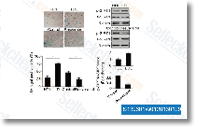
| S1396 | Resveratrol (trans-Resveratrol) | Resveratrol has a wide spectrum of targets including cyclooxygenases(i.e. COX, IC50=1.1 μM), lipooxygenases(LOX, IC50=2.7 μM), kinases, sirtuins and other proteins. It has anti-cancer, anti-inflammatory, blood-sugar-lowering and other beneficial cardiovascular effects. Resveratrol induces mitophagy/autophagy and autophagy-dependent apoptosis. |
|
|
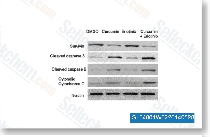
| S1848 | Curcumin | Curcumin (Diferuloylmethane, Natural Yellow 3, Turmeric yellow) is the principal curcuminoid of the popular Indian spice turmeric, which is a member of the ginger family (Zingiberaceae). It is an inhibitor of p300 histone acetylatransferase (IC50~25 μM) and Histone deacetylase (HDAC); activates Nrf2 pathway and supresses the activation of NF-κB. Curcumin induces mitophagy, autophagy, apoptosis, and cell cycle arrest with antitumor activity. Curcumin reduces renal damage associated with rhabdomyolysis by decreasing ferroptosis-mediated cell death. Curcumin exhibits anti-infective properties against various human pathogens like the Influenza Virus, hepatitis C virus, HIV and so on. |
|
|
| S5771 | Sulforaphane | Sulforaphane is a naturally occurring isothiocyanate derived from the consumption of cruciferous vegetables, such as broccoli, cabbage, and kale. It is an inducer of Nrf2. This compound is also an inhibitor of histone deacetylase (HDAC) and NF-κB. It increases heme oxygenase-1 (HO-1) and reduces the levels of reactive oxygen species (ROS). It induces cell cycle arrest and apoptosis. |
|
|
| E1912 | B102(PARP/HDAC-IN-1) | B102(PARP/HDAC-IN-1) is a dual inhibitor of PARP and HDAC, with IC50 of 19.01 nM, 2.13 nM, 1.69 μM, > 10 μM for PARP1, PARP2, HDAC1, HDAC6, respectively, in an enzymatic assay. It exhibits anti-proliferative and anti-tumour effects. It also induces DNA damage and apoptosis in vitro. | ||
| S9275 | Isoguanosine | Isoguanosine (Crotonoside) inhibits FLT3 and HDAC3/6 for the treatment of AML. This compound is a naturally occurring active isomer of guanosine that is found in the seeds of Croton tiglium. |

Products are for research use only. Not for human use. We do not sell to patients.
©Copyright 2013 Selleck Chemicals. All Rights Reserved.